
Varanasi, one of the oldest surviving cultural hubs, is witnessing a groundbreaking historic transformation in its urban transport system with the introduction of the Varanasi Ropeway System. This iconic ropeway project covers Cantt to Godowlia with cable cars to reduce traffic congestion, improve daily commuting, and offer a modern, eco-friendly transport alternative for locals, as well as tourists, for a comfortable Kashi Darshan
Under the National Ropeway Development Programme (Parvatmala Pariyojana), integrated with the Varanasi Smart City mission, the cable cars in Varanasi will significantly cut travel time between key city zones. This will help in providing a safe, comfortable, and scenic travel experience for Banarasis, as well as the tourists. Apart from boasting as the first Urban Ropeway Transit in India, it is also the third city in the world to have a public ropeway transport, after La Paz (Bolivia) and Mexico City.
Until the ropeway project is complete, you can explore the city without having to drive in the congested lanes with Chiku Cab. Dial 844-844-5504 and book the most comfortable cabs in Varanasi to make your Kashi Darshan memorable before a new revolution shapes the city.
Quick Summary: Top Facts about the Kashi Ropeway Project
- Length: about 3.7–3.8 km
- Operating Height: 45 m
- Stations: five planned between Varanasi Cantt and Godowlia
- Expected ride time: ~12–18 minutes end-to-end (vs 40–60 minutes by road in heavy traffic).
- Number of Cable Cars: 220
- Bid Price: ₹815.6 crore (US$96 million)
- Initial project Cost: ₹645 crore (US$76 million)
These figures are sourced from the official project briefs and recent press coverage for your kind consideration.
What Is the Varanasi Ropeway Project?
The Varanasi ropeway is an advanced urban cable car system designed to transport passengers above city roads using beautiful Gondolas hanging from strong steel cables. Unlike traditional ropeways limited to hilly areas, this is a fully urban ropeway infrastructure built to serve daily commuters, pilgrims, students, office workers, and tourists.
As per official government announcements, the project is being executed with international safety standards, automated operations, and weather-resilient technology. The ropeway will operate like a metro in the air, running continuously with minimal waiting time.
Varanasi Ropeway Crash News: Viral Video
Avoid fake news like the new viral video circulating showing the Varanasi Ropeway crashing. According to various media reports, it was a real ropeway accident in Maa Bamleshwari Temple in Dongargarh, Chhattisgarh, in April 2025, not in Varanasi. The Kashi ropeway is currently in its testing phase and is set to begin its operations soon.
Varanasi Ropeway Route and Stations
The Varanasi ropeway route connects the city’s most congested and high-demand travel corridor.
Proposed and confirmed Kashi ropeway stations include:
- Varanasi Cantt Railway Station
- Mahatma Gandhi Kashi Vidya Peeth (MGKVP)
- Rathyatra
- Girja Ghar
- Godowlia
This stretch covers major residential, educational, commercial, and pilgrimage zones, which currently experience severe traffic congestion.
Varanasi Ropeway Map
The primary ropeway corridor runs between:
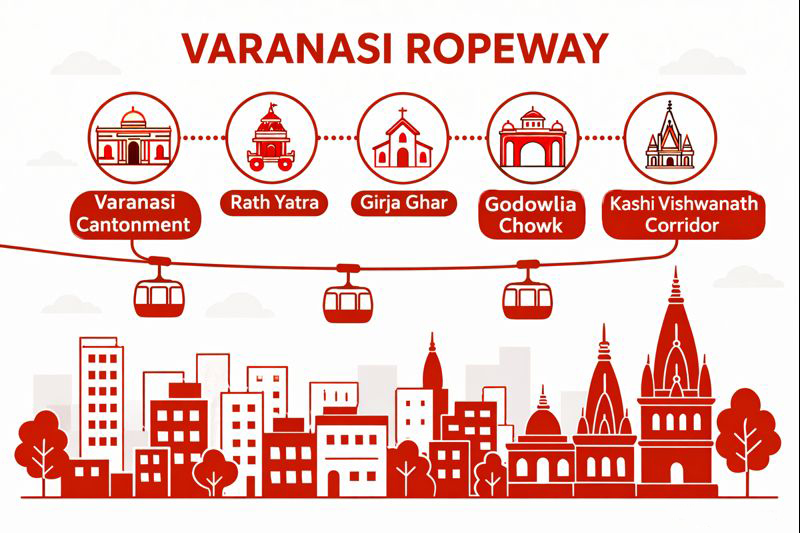
Cantt Railway Station (Varanasi Junction) to Godowlia (for Shree Kashi Vishwanath Mandir/Dashashwamedh Ghat/Manikarnika Ghat): Ropeway Map
Each ropeway station is designed with escalators, elevators, ticket counters, digital displays, CCTV surveillance, and barrier-free access for senior citizens and passengers with disabilities.
How to travel comfortably from Varanasi Cantt to Godowlia for Kashi Vishwanath Darshan?
Until the project is completed, the most comfortable way to reach the Shree Kashi Vishwanath temple/Godowlia is by booking a cab. Chiku Cab offers the lowest taxi fares in Varanasi for pilgrimages, airport rides, Kashi and Sarnath tours, and much more, with up to 20% discounts on Senior Citizens’ pilgrimage trips. Dial 844-844-5504 to reach Godowlia/Dashashwamedh Ghat from Varanasi Cantt Jn comfortably.
Varanasi Ropeway Distance, Fare and Travel Time
- Total ropeway route length: 3.75 km (approximately)
- Estimated ropeway travel time from Cantt to Shree Kashi Vishwanath: 15 to 18 minutes (approximately).
Currently, the same journey by road can take anywhere between 45 minutes to over 90 minutes during peak hours. Hence, the ropeway is expected to reduce commute time by over 60%.
Varanasi Ropeway Ticket Price (Expected)
As per planning documents and comparable urban ropeway projects, the Varanasi ropeway ticket price is expected to be affordable and aligned with public transport fares.
- Expected ticket range: ₹50 to ₹100 per one-way trip (final pricing subject to government notification)
Special provisions such as daily passes, student concessions, and monthly commuter passes may be introduced after launch to encourage regular usage.
Varanasi Ropeway Daily Timings (Expected)
Once operational, the Varanasi ropeway timings are expected to cover long daily operating hours to serve office commuters and pilgrims alike.
Expected Daily Operational Hours of the Cable Car:
- Morning: 6:00 AM
- Night closure: 10:00 PM to 11:00 PM
Exact timings will be officially notified closer to the Varanasi Ropeway inauguration. During peak festivals, exam seasons, and tourist influx, timings may be extended.
Varanasi Ropeway Opening Date – Latest Updates
As per the latest government-approved updates, the Varanasi ropeway project is in the advanced construction and system integration phase. We can clearly see trial runs for safety and operational testing going on from the roads below (as observed during on-ground trial activity and public system testing).
Expected opening timeline:
Late 2025 to early 2026 (subject to final inspections and approvals)
Since the ropeway involves complex urban engineering, authorities are prioritising safety and reliability over rushed inauguration.
Safety, Technology and Key Information about the Construction of the Ropeway in Varanasi
The project is a government-backed urban transport initiative planned by the two Austrian engineering firms, Salzmann and Bernard Group.
- VDA authorised NHLML to study and execute the project and signed the Memorandum of Understating (MoU) with the Government of Uttar Pradesh and Indian Railways.
- Sai Geotechnical Engineer Pvt Ltd conducted the geotechnical investigation
- In December 2022, the NHLML awarded the contract worth ₹807 crore (US$95 million) to Vishwa Samudra Engineering Private Limited and Bartholet Maschinenbau AG of Switzerland.
Ropeway systems use redundant cable circuits, automatic braking systems, real-time monitoring and standardised evacuation procedures — all subject to statutory safety certification and periodic audits before and after launch. For more details, consult the official project release and tender documents.
Is the Varanasi Ropeway Safe?
Safety is a key focus for the Varanasi ropeway project, considering the highest footfall in India after the Mahakumbh and Ayodhya Ram Mandir. The Urban Ropeway system is designed using globally proven ropeway technology with multiple redundant safety mechanisms.
Key safety features include:
- 24×7 CCTV monitoring
- Emergency evacuation protocols
- Wind and weather monitoring sensors
- Trained technical staff at every station
- Automated speed control and braking systems
As per official statements, the ropeway complies with international ropeway safety standards used in Europe and advanced Asian cities.
Varanasi Ropeway Capacity and Cabins
Each ropeway cabin (Gondola) is expected to carry 8 to 10 passengers comfortably. Cabins will arrive at stations every few seconds, ensuring minimal waiting time even during peak hours.
- Estimated passenger handling capacity: Up to 3,000 passengers per hour per direction (up to 96,000 passengers per day)!
This makes the ropeway a viable mass transport solution rather than a limited tourist ride.
Who Should Use the Varanasi Ropeway?
- Daily commuters travelling between Cantt and Godowlia
- Pilgrims visiting the Kashi Vishwanath Dham corridor
- Senior citizens seeking hassle-free travel
- Residents and Commuters to Godowlia and nearby areas
- Tourists looking for a scenic city overview until the Dashashwamedh Ghat
The ropeway will also reduce road congestion, noise pollution, and vehicular emissions in Varanasi’s narrow streets. During festivals like Dev Deepawali, Mahashivratri, and Shravan month, the ropeway will become one of the most efficient ways to navigate the city.
How to Book Varanasi Ropeway Tickets?
The information about booking will be announced by the ropeway authority before launch. After its inauguration, Ticket booking methods are expected to include on-site ticket counters at ropeway stations. You can expect the Ropeway to accept cash and UPI, like many metros across India.
Comparing Varanasi Ropeway vs Road Travel in Banaras
The following problems in Varanasi make road travel quite tiring and unnecessarily long.
- Traffic congestion
- Processions and religious events
- Narrow lanes and encroachments
- Frequent road diversions
The ropeway bypasses all these challenges by operating above ground, offering a quick travel solution, regardless of traffic conditions.
Varanasi Smart City Development: Environmental and Heritage Considerations
Urban ropeways in heritage cities like Varanasi balance modern mobility and the rising pollution levels, especially in North India. However, this project will also be able to address the travel needs of the large flocks of tourists that reach the city and are unable to find comfort and peace, the one that they are looking for, in the normal transit. Hence, this would not only help the environment but would also allow scenic transportation, avoiding traffic.
The ropeway is a key component of Varanasi’s long-term urban mobility plan. Along with the corridor redevelopment, e-bus services, and pedestrian-friendly zones, the ropeway reflects a shift toward sustainable and intelligent urban transport development, contributing to nature, and addressing the rising environmental concerns.

Frequently Asked Questions
What is the Varanasi ropeway Project?
The Varanasi ropeway is an urban cable car system designed to connect Cantt Railway Station and Godowlia for easy Kashi Darshan and public transport, reducing travel time and traffic congestion.
Is the Varanasi ropeway operational now?
No. As per the latest updates, the ropeway is under construction and testing. Public operations are expected in late 2025 or early 2026.
What is the ticket price of the Varanasi ropeway?
The expected ticket price ranges between ₹50 and ₹100 per trip, subject to final government approval.
How long does the Varanasi ropeway journey take?
The complete journey from Cantt to Godowlia for Shree Kashi Vishwanath Darshan is expected to take around 15 to 18 minutes.
Is the Varanasi ropeway running today?
No. Still in the testing phase, the Varanasi Ropeway is yet to be inaugurated.
Which areas are covered by the Varanasi ropeway?
Major areas include Cantt Railway Station, Mahatma Gandhi Kashi Vidyapeeth (MGKVP), Rathyatra and Godowlia (near Shree Kashi Vishwanath temple and Dashashwamedh Ghat).
Is the Varanasi ropeway meant only for tourists?
No. It is designed primarily as a public transport system for daily commuters, students, residents, senior citizens and tourists as well.
With 7+ years of experience as a professional content writer, I specialise in blog and academic content writing. For me, writing is simply more than my profession—it’s a journey of self-discovery through spiritual exploration and soulful expression, often inspired by music and mindfulness.