
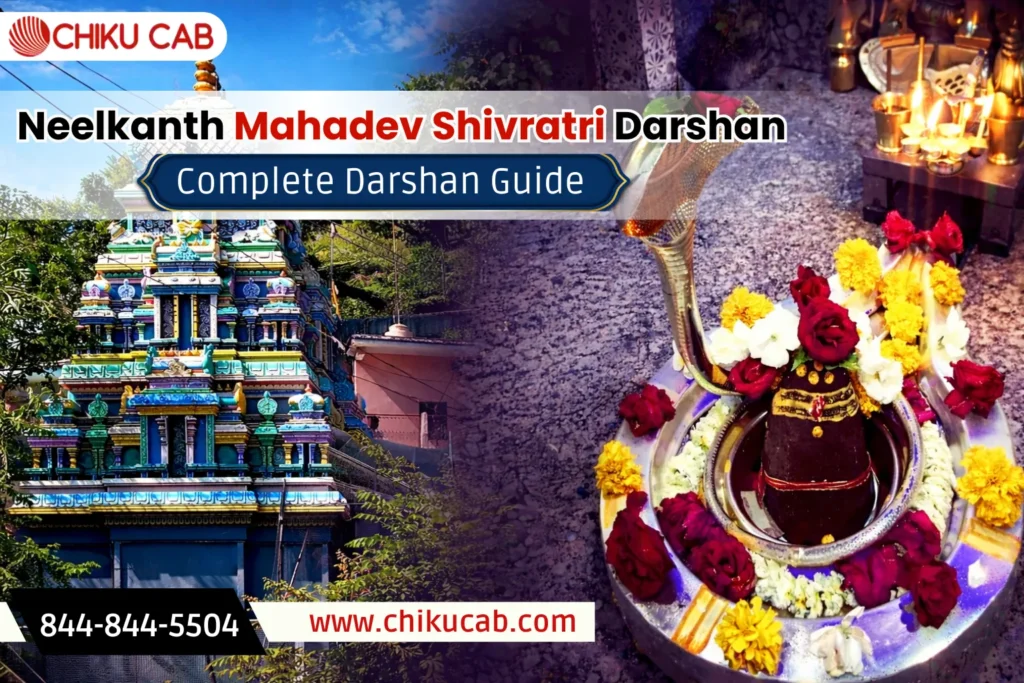
Maha Shivratri is a slow gathering of faith, anticipation, and silence that deepens as the hours pass. At Neelkanth Mahadev Temple, Shivratri feels different from most other Shiva shrines. The forested climb, the narrowing roads, the smell of incense mixed with damp earth, and the steady movement of devotees towards the sanctum create a rhythm that begins long before darshan and stays long after it ends.
This guide will help you plan your Neelkanth Mahadev Temple Shivratri darshan efficiently. I have explained how darshan works on Shivratri, what timing to expect, how rituals take place throughout the day and night, how to reach the temple, and how to plan your visit so that you don’t get exhausted in the process.
About Neelkanth Mahadev Temple
The Neelkanth Mahadev Temple stands in the Nar-Narayan mountain range, about 32 kilometres from Rishikesh, surrounded by thick forest and steep valleys. It is one of the most revered Shiva temples near Rishikesh because of what it represents in Shaivite belief.
According to the Samudra Manthan legend, this is the place where Lord Shiva consumed the poison that emerged during the churning of the cosmic ocean. To prevent the poison from destroying creation, he held it in his throat, which turned blue. From this act comes the name Neelkanth, the blue-throated one. For devotees, this temple is not just a shrine but a reminder of sacrifice, restraint, and cosmic responsibility.
On ordinary days, the temple draws steady footfall. On Neelkanth Mahadev Temple Shivratri, that footfall becomes a river. Pilgrims arrive from Uttarakhand, Uttar Pradesh, Delhi, Haryana, and beyond. Many walk portions of the route as an act of penance. Others arrive by road, but all move with the same intent: Shivratri darshan at Neelkanth Mahadev, on the night believed to be closest to Shiva’s cosmic stillness.
Why Shivratri is Special at Neelkanth Mahadev
Shivratri at Neelkanth is not a grand spectacle. There are no grand processions or loud celebrations. What makes this night special is pure devotion. Hours-long rituals are performed. Devotees wait patiently in long queues. The forest grows quieter as midnight approaches.
Devotees believe that worshipping Shiva at Neelkanth on Shivratri carries amplified spiritual merit because this is where Lord Shiva absorbed the world’s poison. The idea is simple but powerful. If Lord Shiva endured suffering here to protect creation, then this is the place to seek strength during one’s inner turbulence.
Throughout the day, priests perform regular abhisheks and pujas. As night falls, the pace changes. The temple prepares for Nishita Kaal, the midnight period considered most sacred on Shivratri. This is when crowds swell, chants grow louder, and darshan becomes slow but intense. Many devotees wait for hours without complaint. For them, the waiting itself becomes worship.
Neelkanth Mahadev Shivratri Darshan Timings
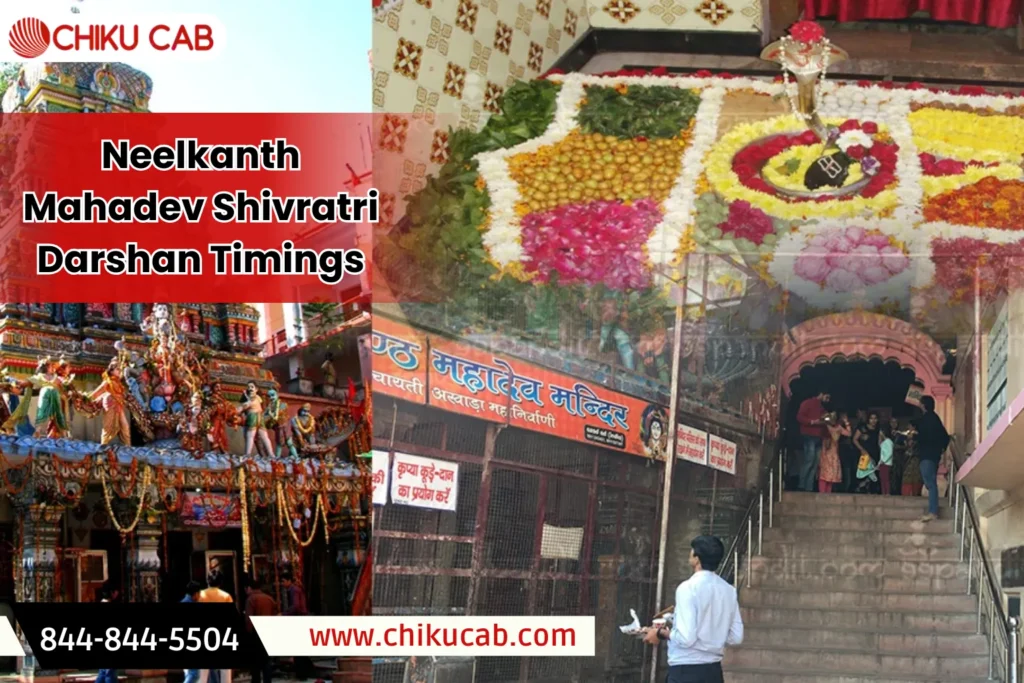
Understanding timings is crucial for anyone planning Neelkanth Mahadev Temple Shivratri darshan, because the experience changes dramatically depending on when you arrive.
On regular days, the temple opens early in the morning, usually around 5:00 AM, and remains open through the day with brief afternoon pauses depending on crowd and ritual schedules. On Maha Shivratri, these timings are extended. The temple remains accessible late into the night to accommodate the surge of devotees.
Morning darshan on Shivratri is calmer. Elderly devotees and families with children often choose this window. The queues move steadily, rituals are unhurried, and the mountain air still carries the chill of dawn.
As the day progresses, crowds build. By evening, the approach road slows, parking areas fill, and queue systems are enforced more strictly. The most intense period begins late at night. Neelkanth Mahadev Temple night darshan on Shivratri, especially around midnight, draws the largest congregation. Nishita Kaal darshan may require extended waiting, but for many devotees, this is the heart of the Shivratri experience.
Aartis are performed at traditional intervals, including early morning Mangala Aarti, evening Sandhya Aarti, and midnight rituals aligned with Nishita Kaal. Exact minutes may vary each year based on lunar calculations, so flexibility is essential.
How to Reach Neelkanth Mahadev Temple on Shivratri
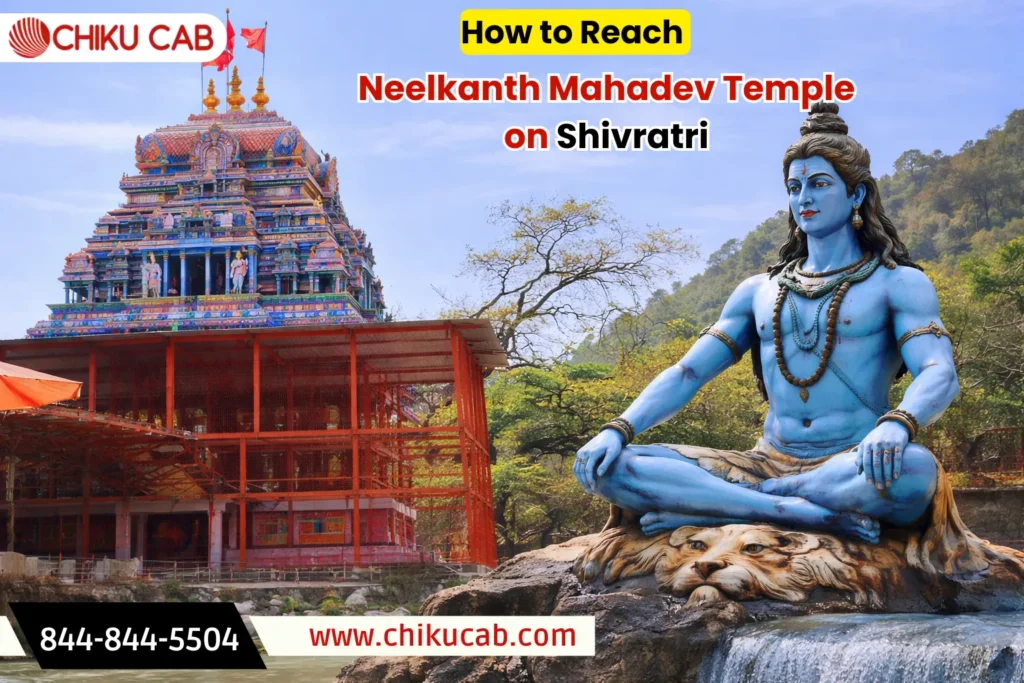
Reaching Neelkanth Mahadev Temple is part of the pilgrimage. On Shivratri, it requires planning and patience.
From Haridwar
The distance from Haridwar to Neelkanth Mahadev Temple is roughly 50 kilometres. On normal days, the journey takes about two hours. On Shivratri, travel time can extend significantly due to traffic restrictions and crowd movement.
Taxis are the most reliable option for devotees coming from Haridwar. Shared jeeps operate on this route, but availability becomes unpredictable on festival days. Buses may run only up to certain points, after which walking is required.
Those following a Haridwar to Neelkanth Mahadev taxi guide often prefer to start early in the morning or late at night to avoid congestion. Night travel should be approached carefully, as forest roads are narrow and visibility can be limited.
From Rishikesh
Rishikesh is closer and more commonly used as a base. The road from Rishikesh to Neelkanth winds through forested hills and small settlements. On Shivratri, police checkpoints regulate vehicle flow, and parking is managed near designated zones.
Private taxis and two-wheelers are common, but walking the final stretch is not unusual during peak hours. Some devotees choose to trek portions of the route as an act of devotion, though this is best attempted only by those physically prepared.
Understanding how to reach Neelkanth Mahadev Temple from Haridwar or Rishikesh ahead of time reduces stress and allows you to focus on the spiritual purpose of the journey.

Shivratri Crowd Management and Safety
The question most pilgrims ask is simple: Is Neelkanth Mahadev crowded on Maha Shivratri? The answer is yes, but the crowd is managed.
Local authorities, temple committees, and volunteers work together to create barricaded queues, regulate vehicle access, and provide medical assistance. Still, personal preparation matters.
Peak crowd density occurs from evening until after midnight. Those uncomfortable with long-standing times should plan morning darshan instead. Senior citizens are advised to avoid late-night queues unless assistance is arranged.
Carry water, wear warm clothing, and avoid carrying unnecessary valuables. Mobile networks can become unreliable due to congestion, so inform your family of plans beforehand. The environment is devotional but physically demanding, and respecting one’s limits is part of a safe pilgrimage.
Dress Code, Puja Items, and Darshan Rules

Neelkanth Mahadev Temple does not have a dress code, but it’s recommended that you wear modest clothes. Simple, comfortable clothing suited for cool mountain weather works best. Footwear must be removed before entering the temple area, and designated stalls are available nearby.
Traditional offerings include milk, water, bael leaves, fruits, and flowers. These items are easily available near the temple entrance, so carrying them from afar is not necessary. Plastic use is discouraged, and devotees are requested to follow instructions issued by temple authorities.
Photography inside the sanctum is not allowed. Maintain silence and patience. Darshan rules may change slightly on Shivratri depending on crowd flow, so following volunteer guidance ensures smoother movement for everyone.
Best Time and Day Plan for Shivratri Darshan
Choosing the best time to visit Neelkanth Mahadev on Shivratri depends on your priorities.
If your focus is calm darshan and ritual participation, early morning is ideal. If your intent is to experience the spiritual intensity of Shivratri night, then Nishita Kaal darshan is unmatched.
Begin your day with an early morning darshan before sunrise. After that, you can take a walk, explore nearby places, or simply rest and return to the temple for evening or night rituals. It is best that you stay overnight in Rishikesh.
Nearby Temples and Places to Visit
A pilgrimage to Neelkanth Mahadev often extends beyond only that temple. Rishikesh offers several spiritually aligned destinations that complement the experience. Triveni Ghat, with its evening Ganga Aarti, provides a gentle closure after the intensity of Shivratri. Ram Jhula and Lakshman Jhula offer quieter reflection spaces during off-peak hours.
For those returning to Haridwar, Hari Ki Pauri remains a natural stop, especially for devotees seeking to conclude their journey with a sacred dip or evening aarti.
FAQs About Neelkanth Mahadev Darshan
Q. What are Shivratri darshan timings at Neelkanth Mahadev Temple?
A. Darshan usually begins early morning around 5:00 AM and extends late into the night on Maha Shivratri, including special midnight rituals.
Q. Is Neelkanth Mahadev Temple open at night on Shivratri?
A. Yes. The temple remains open for night darshan, particularly for Nishita Kaal worship, which is considered highly auspicious.
Q. How crowded is Neelkanth Mahadev Temple on Maha Shivratri?
A. Crowds peak from evening to midnight. Morning hours are comparatively less crowded and more suitable for elderly devotees.
Q. How can I reach Neelkanth Mahadev Temple from Haridwar?
A. Private taxis and shared jeeps are the most practical options. Starting early helps avoid congestion.
Q. Is Neelkanth Mahadev Temple safe to visit on Shivratri?
A. Yes, with crowd control measures and medical support in place. Personal preparedness and timing choices enhance safety.

I’m a wanderer who loves venturing on to unknown and unseen places. I explore freely to various fun and adventurous places, whether it be spiritual temple tours, captivating landscapes, and more. I wonder around in search of hidden gems and tourist attractions, temples, and other places.