
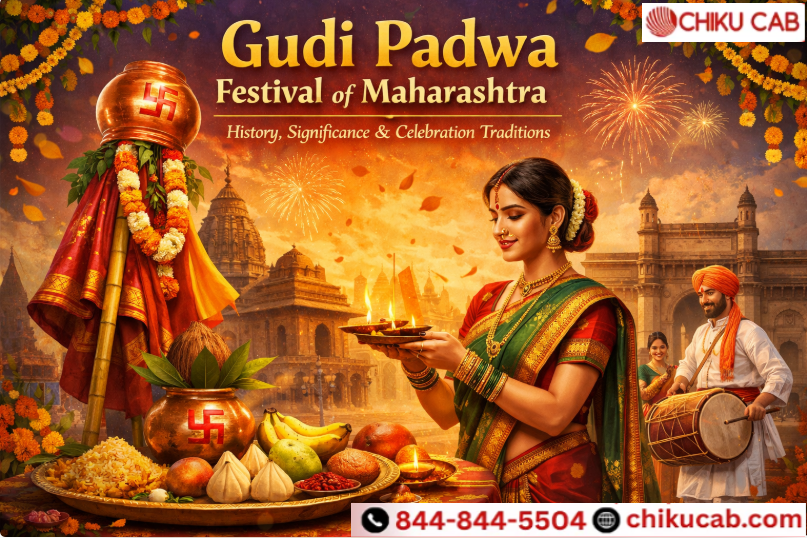
Gudi Padwa Festival is the greatest festival celebrated in Maharashtra, and it is also the Marathi New Year Day. It marks the first day of the Vikram Samvat (Hindu) New Year, represents new beginnings for all of Maharashtra, and brings hope, joy, and oneness to everyone in the state. This blog post will discuss Gudi Padwa Festival, what Gudi Padwa means within Hinduism, how to celebrate Gudi Padwa at home with a step-by-step guide, and how to participate in Gudi Padwa celebration in Mumbai, Gudi Padwa festival in Pune, Nashik, and Nagpur. If you would like to find out what celebrating New Year’s is like in Maharashtra, please read through the entire blog post on Gudi Padwa Festival of Maharashtra,
as it will provide you with a complete description of the festival, examples of local culture, expert advice from individuals within Maharashtra, and all of the information you will need to celebrate Gudi Padwa with your loved ones.
What is Gudi Padwa? The Story and Historical Significance
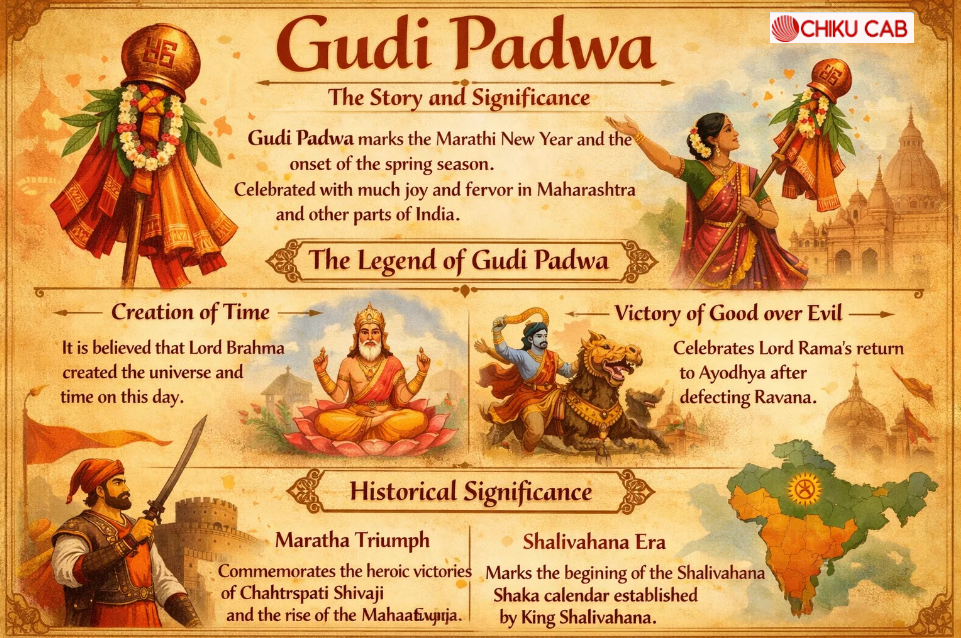
Marathi New Year’s Day, or Gudi Padwa, falls on the first day of the Bright Phase of Lunar Month of Chaitra of the Hindu Lunisolar Calendar (also known as Chaitra Shukla Pratipada), usually March or early April. For the majority of Maharashtrians, Gudi Padwa is an important festival that signifies both the renewal of nature and the history of significant events.
Gudi Padwa Story
The story behind Gudi Padwa festival revolves around multiple beliefs:
- According to Hinduism, Lord Brahma created the universe on Chaitra Shukla Pratipada, which marks the beginning of a new age for the calendars and is also known as the Hindu New Year. Devotees throughout the region of Maharashtra celebrate this occasion.
- One of the legends associated with this day of Gudi Padwa states that it is the day when Lord Rama returns to Ayodhya after defeating Ravana and the people of Ayodhya celebrate by displaying ‘Gudi’ (Victory Flags) in commemoration of his victory; Gudi Padwa is also celebrated in order to remember the greatness of Chhatrapati Shivaji Maharaj, the founder of the Maratha Empire, who hoisted a Victory Flag (Gudi) on this day when he defeated his enemies.
These stories make the Gudi Padwa Festival of Maharashtra an occasion of immense cultural pride and spiritual importance.
Why is Gudi Padwa Celebrated in Maharashtra?
In Maharashtra, the holiday Gudi Padwa is celebrated with a lot of enthusiasm. It represents new beginnings and good fortune and brings people together in celebration. Gudi Padwa also represents the spirit of Gudi Padwa by connecting the various cultures that construct it.
Importance of Gudi Padwa in Hindu Religion
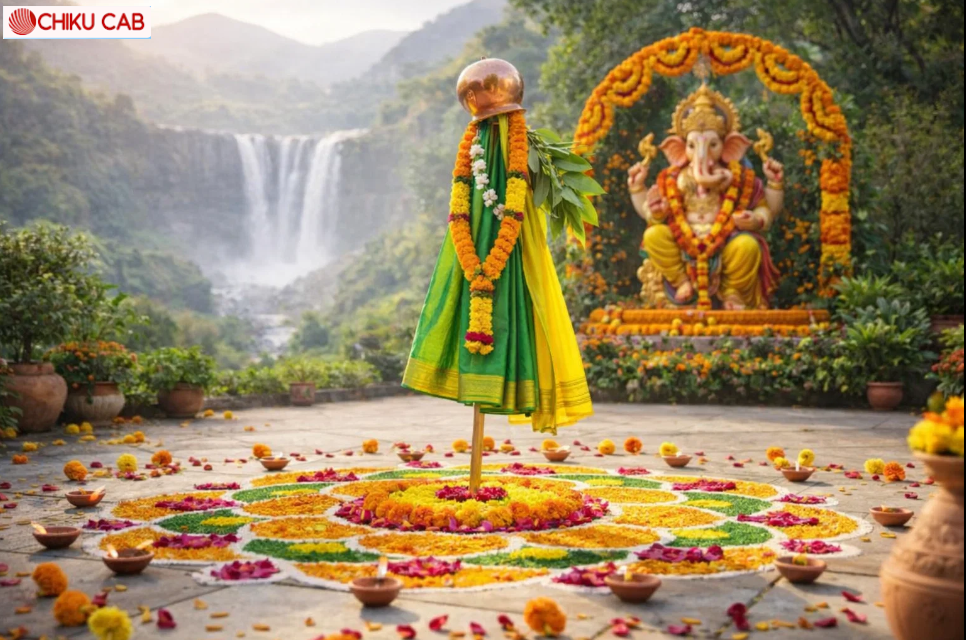
Gudi Padwa is observed by numerous individuals to obtain a blessing for good luck and protection from negative energy when raising their Gudi. Additionally, by sacrificing their Gudi as an offering during the harvest season, they express their gratitude for the bounty produced by the earth and nature during the previous year’s growing cycle. (For farmers, they will use this opportunity to mark this date as the beginning of the next growing year’s cycle. Families will utilize this occasion to celebrate new starts. )
Although there are some different components to each celebration of Gudi Padwa (festivals, celebrations, music, dancing, traditional dress, regional food, and community participation) throughout Mumbai, Pune, Nagpur and Nashik, they all share one common theme – to bring together communities in a spirit of hope, good luck and unity.
Gudi Padwa 2026 Date & Time (March 30, Monday)
The Date/Time for the Gudi Padwa Festival for 2026 will be compiled by the local puja pracharak before the festival date. However generally Gudi Padwa pujas are done from 6 a.m. to noon on the day of Gudi Padwa.
The festival known as Gudi Padwa is generally held in the early hours of the day following a group bathing session by all members participating in the morning ritual of each individual. This festival also celebrates the beginning of the Icelandic year and Vikram Samvat 2083; VY2082;1. Community gatherings and time tables from neighbourhoods including Morgantown, Pittsburgh, Harrisburg, Washington D.C., Baltimore, Philadelphia, and other locations in the state of Maharashtra (State of Maharashtra) will be published on the Internet through the various Houses of Worship accessible through those respective communities.
Gudi Padwa Puja Rituals: Puja Setup & Requirements (Item List) to Start a New Year
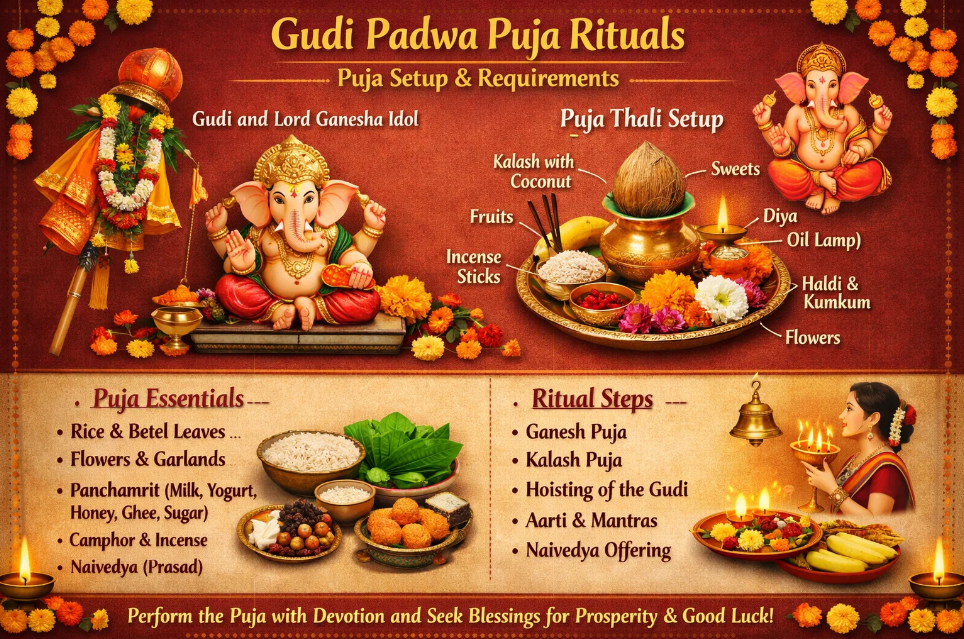
The New Year in Maharashtra begins with sunrise, with house cleaning, having a ceremonial oil bath & getting dressed in new furniture… This is a step-by-step order to perform Gudi Padwa with one-step at a time.
Step 1: Clean Your Home: The first initial part of this event will be to clean all parts of your home, including the main entranceway into your home (which in most Indian homes is usually also decorated with torans made from mango and neem leaves).
In order to make a Gudi (the decorative pole which is raised on Gudi Padwa), you will need to add mango and neem leaves to the top of it, add floral garland as well as an upside down kalash (either made of copper or silver) on top of that.
How to Hang/Hoist to Gudi: The gudi should be hung outside of the main front entrance of your home or at your balcony.
To worship your gudi you will need to put turmeric (haldi) and kumkum (vermilion) onto the gudi and do pooja by burning agarbatti and lighting a diya in front of the gudi on Gudi Padwa.
The items needed for Gudi Padwa Pooja are:
- Long bamboo/cane stick
- Colored/new silk cloth
- Mango/yellow leaves
- Marigold flower garland
- Upside down copper or silver kalash
- Gathi/ sugar crystals
- Haldi/ turmeric and kumkum/ vermillion.
You can usually find Akshata (rice with kumkum), incenses, diyas, and Gudi kits for Gudi Padwa at shops and bigger metropolitan areas of Mumbai, Pune, or Nagpur during Gudi Padwa season, however you may have to go to multiple shops to find everything you want.
There are many ways families can come together during the Gudi Padwa festival through prayer, decoration of their homes, food, and traditions of the festival. The following list includes ideas and suggestions that can help you to make this a special celebration for all of your family members.
- Get fresh flowers such as marigolds, jasmine, and roses for the entrance to your home.
- Use bright colors, flowers, and wheat flour to make complex rangoli designs to protect your family from negativity this Gudi Padwa.
- Offer flowers, akshata, and aarti during the special puja for the new year.
- Recite any new year’s mantras that would be special to you.
- Give a combination of jaggery and neem leaves and tamarind as prasad for a healthy life and a prosperous future.
- Have a big family gathering with your friends and family on Gudi Padwa.
- Request blessings from your elders and distribute sweets to your neighbors.
In Maharashtra (India), particularly in Mumbai and Pune, gudi is typically constructed using balconies/windows of flats, since that space is available within the home.
Traditional Gudi Padwa Foods (Cuisine)/ Dishes
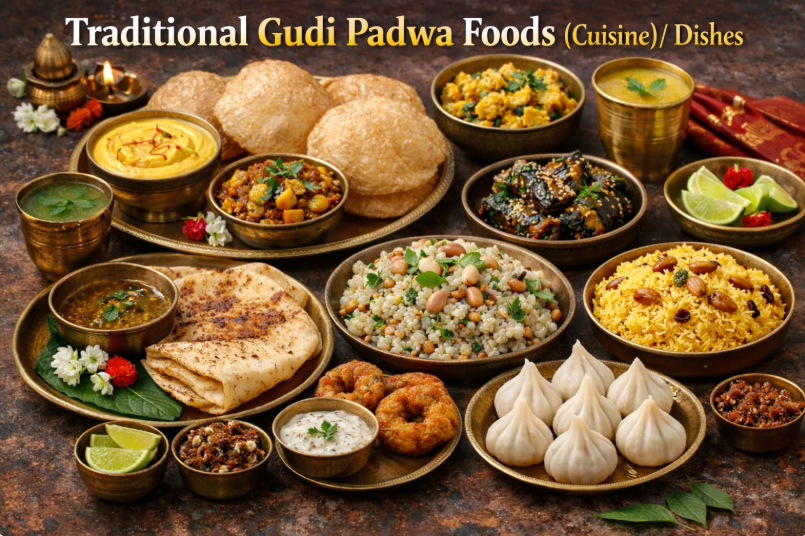
Traditional Gudi Padwa Foods will not be complete without an in-depth analysis on Gudi Padwa Cuisine and Traditional Dishes: List of Traditional Gudi Padwa Foods:
- Puran Poli – Puran Poli is made from chana dal (ground split pigeon peas) that are sweetened and shaped into a flatbread.
- Shrikhand – This dessert is made from curd which has been sweetened and spiced by adding cardamom and saffron. It can be served with puris (deep-fried), or alone.
- Batata Vada – Batata Vada is a spicy and tasty dumpling made from deep-fried mashed potatoes.
Gudi Padwa presents food lovers with an opportunity to taste traditional Maharashtrian cuisine as many restaurants across Pune and Mumbai offer special thali meals for Indian New Year celebrations. Below are some common Maharashtrian dishes you might find on one of these restaurants’ menus –
- Kothimbir Vadi – This savory snack is made of fresh coriander leaves and chickpea flour (gram flour),
- Aamras – Creamy mango puree, typically eaten with puris (flat bread), is usually served if Gudi Padwa falls after the last day of the lunar month of Chaitra),
- Sabudana Khichdi – Sago pearls are combined with ground nuts, are the main dish for people who observe fasting during Vrat),
- Sakar Bhat – A sweet dish of sub-turbanised rice cooked with jaggery is made at Gudi Padwas.

Decorations and Traditional Attire for Gudi Padwa
Rangoli is the perfect way to decorate for Gudi Padwa, as they combine traditional designs such as the swastika, lotus, and peacock, as well as modern ones where you can use sticker rangoli for convenience in today’s homes. Use torans (garlands of mango and neem) on your doors and windows to add an element of culture. You can also use strings of flowers (marigolds and roses) on your entrance to the house and on the door to your pooja room as decoration. To personalise Gudis for your family could be achieved with your family name, decorative beads, and colourful threads.
As Gudi Padwa approaches, you can see lots of rangoli designs related to this holiday on social media; show off your creativity this week before the festival!
Dressing in traditional costume for Gudi Padwa is also a major part of this festival. Women will wear a nauvari saree (9 yard) or a paithani saree, and men usually wear kurta pajama or dhoti kurta; on occasion, men also wear pheta.
Many of those taking part in the Gudi Padwa Festival celebrations throughout Mumbai and Pune will wear their traditional clothing and, due to the large number of women and men who will attend the event, the celebration will have a colourful and authentic appearance.
Gudi Padwa Celebrations in Major Cities
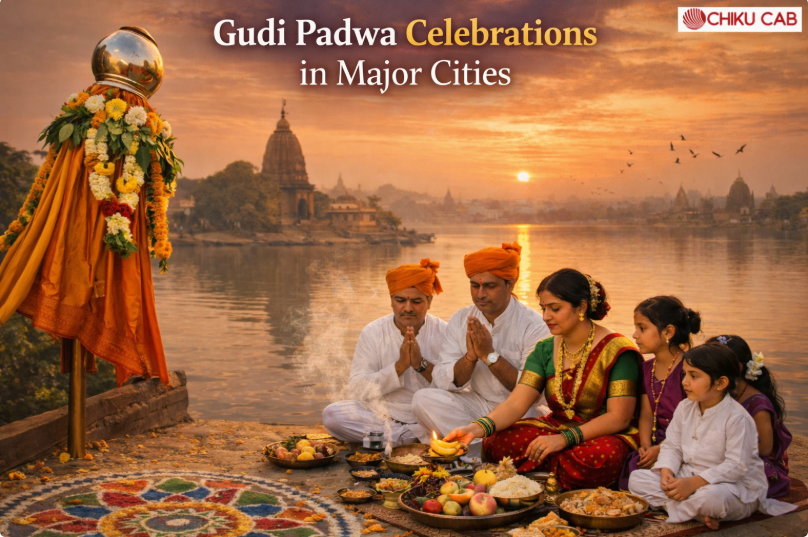
Gudi Padwa celebration in Mumbai
Shobha Yatras are festive events attended by many people in Mumbai. They comprise an array of fun activities (including lezim dancers, dhol-tasha, elaborate floats, and communal-style clothing) and everyone wears their traditional clothing for the occasion. Some of the most popular areas to attend the elaborate Shobha Yatras are Girgaon, Dadar, and Thane. In addition to the Shobha Yatras, celebrations take place in housing societies throughout Mumbai, where they host large community dinners to celebrate Gudi Padwa.
Gudi Padwa festival in Pune
Pune is famous for its vibrancy, with lots of fun dhol-tasha performances and events during Gudi Padwa. Many cultural celebrations occur in older areas around Pune such as Shaniwar Wada. Additionally, various cities host competitions for decorating Gudi’s and Rangoli’s. Also, there are many restaurants in Pune that offer unique Gudi Padwa Festival foods.
Gudi Padwa Shobha Yatra in Nashik
A large Shobha Yatra occurs in Nashik consisting of >500 participants wearing traditional attire, decorated floats and displays of culture. Women arrive riding on scooters while wearing Nauvari sarees, adding colour to the event. The local community and visitors are present during the festivities. Thus, Nashik has become an excellent city for celebrating Gudi Padwa in all of Maharashtra.
Gudi Padwa Festival events in Nagpur
Parades, plays and music performances are just a few of the many ways that people celebrate Gudi Padwa Festival in Nagpur. The celebrations are very popular with young people, church groups, local residents and the city as a whole; thus they make for a vibrant blend of urban and rural culture.
If you are looking to experience Gudi Padwa Festival celebrations in Maharashtra, here are some places to visit:
- Mumbai – Some of the largest processions in the country can be found throughout Mumbai.
- Pune – Maja Zindagi, where you can experience the authentic Dhol-Tasha style of celebration.
- Nashik – Home to some of the largest Shobha Yatras and Gudi Padwa Festival celebrations near rivers.
- Nagpur: For communities and localised gatherings.
- Kolhapur & Aurangabad: For heritage & authentic rural cultures and temple festivals.
There are plenty of travel options through cabs for Gudi Padwa Festival which will provide you with opportunities to explore the many cities as well as all the unique experiences and other festivities associated with Gudi Padwa.
Gudi Padwa and Ugadi: Key Differences
Gudi Padwa and Ugadi are different New Year’s celebrations held in different locations in India, namely Maharashtra and Goa respectively. Both festivals fall on “Chaitra Shukla Pratipada,” which has marked the start of the lunar calendar. The primary difference between Gudi Padwa and Ugadi lies in making Ugadi “pachadi” a chutney originating from various raw and dried fruits, along with spices, on Ugadi Day and raising the Gudi (a tall wooden pole, draped in a colorful piece of cloth, adorned with flowers) on Gudi Padwa Day. Both festivals are linked to celebrating the commencement of a new year, sharing both significance to the people of India by continuing our rich hereditary customs each year.
Your Ultimate Local Guide to Gudi Padwa Celebrations in Maharashtra: Mumbai, Pune, Nashik & Nagpur – Book Your Chiku Cab Today!
Through many years of attending the Gudi Padwa Shobha Yatra in Nashik and participating in Gudi Padwa Festival celebrations in Mumbai and having the knowledge of the historical significance and regional variations of Gudi Padwa Festival throughout Maharashtra, Pune, Nagpur, those local festival experts have produced this guide to assist you with your search for information concerning the Maharashtra New Year Festival.
Planning a trip to celebrate Gudi Padwa Festival from Nagpur, Nashik, Mumbai, or Pune doesn’t have to be difficult and stressful – just book your Chiku Cab now! Our experienced drivers know all the best routes to get you there on time, including alternate routes with plenty of great places to eat along the way!
Take a look at different aspects of Gudi Padwa, such as Gudi Padwa customs, Gudi Padwa dishes, the Gudi Padwa festival in Mumbai, and others. Also, make sure to make your travel plans before leaving, and dress in appropriate attire for the festivities while expressing good wishes and blessings for the Vikram Samvat New Year! Wishing you a wonderful Gudi Padwa Festival!
Book Your Chiku Cab Today for a Memorable Gudi Padwa Celebration!
Frequently Asked Questions (FAQs)
Q1) What is the Gudi Padwa Festival?
Ans) Gudi Padwa is celebrated as a festival of the New Year in Maharashtra, and it is celebrated on the first day of the Chaitra month according to the lunar calendar (which is also the first day of the Vikram Samvat calendar). The date of Gudi Padwa is determined by the difference between the lunar and solar calendars. All cultural festivities are linked to the start of the new year, and the celebration will have various types of food, rituals, and various forms of community activities.
Q2) At home, there are many ways to celebrate Gudi Padwa Festival.
Ans) You can enhance your home’s beauty by cleaning it thoroughly and making a colourful rangoli for Gudi Padwa. You will also need to raise a gudi, perform puja with appropriate items (flowers, coconut, naivaidya), make festival food to enjoy with family and friends throughout the day.
Q3) Gudi Padwa Festival first began as a way of remembering three events in Hindu mythology:
Ans) God Brahma made the first day of the lunar year, 2) When Lord Rama came back to India from 14 years in exile, and 3) the achievements of Chhatrapati Shivaji Maharaj when he became king. Gudi Padwa is filled with stories about Marathi people!
Q4) Which cities have Gudi Padwa Festival celebrations?
Ans) Cities in Maharashtra, which have Gudi Padwa celebrations include Mumbai, Pune, Nashik, and Nagpur. Each has its own particular way to celebrate Gudi Padwa, with a range of different special activities and events associated with this festival.
Q5) How are Gudi Padwa Festival and Ugadi different?
Ans) Yes, both mark the New Year but are celebrated in different regions with different rituals – Gudi in Maharashtra, Ugadi in Andhra, Telangana, and Karnataka.

I’m a wanderer who loves venturing on to unknown and unseen places. I explore freely to various fun and adventurous places, whether it be spiritual temple tours, captivating landscapes, and more. I wonder around in search of hidden gems and tourist attractions, temples, and other places.


