There are many festivals you celebrate but then there are some festivals which you experience with soul. Holi in Mathura belongs to the latter. Unlike other parts of India where holi is primarily a public celebration of color, in Mathura the birthplace of Lord Krishna – “Holi is a living tradition, a cultural epic that spans centuries, steeped in mythology, devotion and divine love.
Holi celebrations in Mathura, deeply rooted in the legends of Krishna and Radha in the Braj region, began thousands of years ago, traditionally linked to the 4th century or earlier. The festivities originate from the mythological story of Krishna visiting Barsana to play with Radha and the Gopis, evolving into a week-long celebration. According to ancient stories, Lord Krishna was concerned about his dark-blue skin compared to Radha’s fair complexion, was encouraged by his mother Yasoda to color her face. This playful act of love became the foundation of Holi – a festival celebrating divine affection, joy and togetherness.
Why Mathura is the Heart of Braj Holi Celebrations
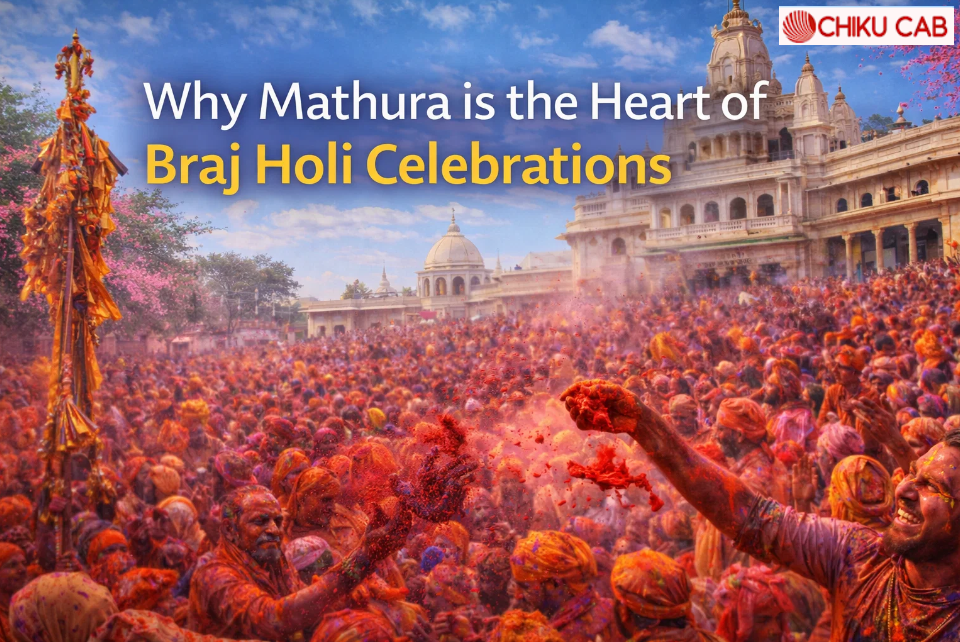
While Holi is a national holiday across India, in the Braj region covering Mathura, Vrindavan and Barsana. The celebration typically spans more than a week, starting with events like the banaras Laddoo Holi in Shriji”s Temple (Radha Rani) and culminating in the grand Rangwali Holi. In 2026, the festivities will commence in late February, with Lathmar Holi in Barsana on February 26th and in Nandgaon on February 27th. Major celebrations occur at the Dwarkadish Temple in Mathura,
the Banke Bihari Temple in Vrindavan for Phoolon Ki Holi and across the Shri Krishna Janmabhoomi complex.
When you witness Mathura Holi 2026, you are not merely attending a festival. You are stepping into a sacred festival performed for thousands of years where mythology, devotion, music and color converge. Every chant of “Radhe Radhe,” every sprinkling gulal and every drumbeat carries the echoes of Krishna’s leelas, inviting participants to celebrate not just with colors,but with heart and soul.
This guide will take you beyond casual observation. It will lead you through each ritual, temple tradition, historical anecdote and practical travel tip, so you can truly experience Holi in Mathura as it was meant to be experienced immersively, spiritually and timelessly.
Understanding the Spiritual and Cultural Foundation of Mathura Holi
Unlike commercial Holi in urban areas, Mathura Holi is a ritualized, devotional festival. It combines three core elements:
- Bhakti – Worship of Lord Krishna through songs, dances and temple rituals.
- Rasa – Celebration of divine love between Radha and Krishna.
- Leela – Reenactment of mythological stories, especially Krishna’s playful interactions with gopis.
Every event, song and ritual in Mathura Holi carries symbolic significance. It is not just fun, it is a spiritual experience.
Mathura Temple Holi – Devotion in form of Celebration
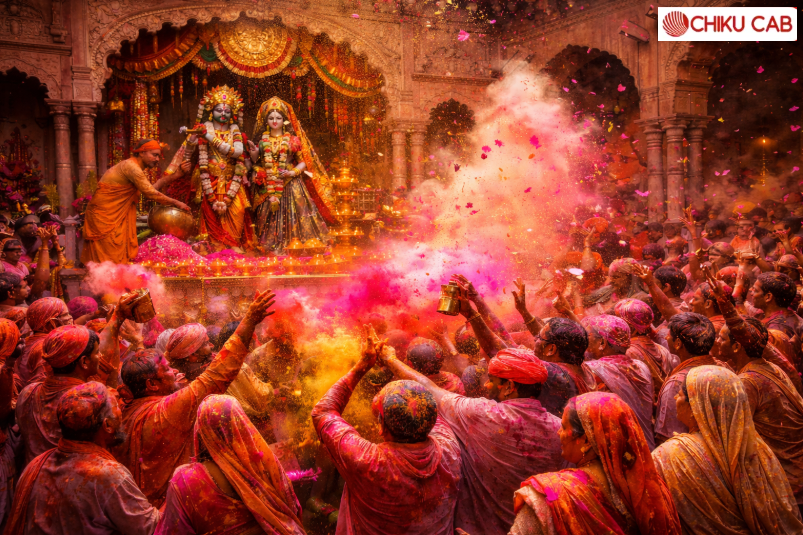
Banke Bihari Temple Holi – The Holi celebration in Banke Bihari Temple is among the most vibrant in vrindavan and this temple is at the heart of the festivities.
- Celebrations begin from Basant Panchami.
- Major Highlight is Rangbhari Ekadashi on 26 feb.
- Phoolon ki Holi is the unique attraction of this temple.
- Abir-Gulal Holi- priest showers devotees with gulal directly from the holy sanctum, symbolizing divine leela of Lord Krishna.
- Morning Timing: 08:45 AM – 01:00 PM,
- Shringar Arti at 09:00 AM
- Evening Timing: 04:30 PM – 08:30 PM.
- Bhog Arti at 8:30 PM – 9:00 PM
Dwarkadhish Temple Holi – Dwarkadhish temple is the major center of devotion and color at the same time in Holi season. Especially Phoolon ki Holi is celebrated with great enthusiasm.
- Morning Timing: 06:30 AM – 10:30 AM
- Shringar Arti: 07:00 AM
- Evening Timing: 04:00 PM – 07:00 PM
- Bhog Arti: 06:30 PM – 07:00 PM
Radha Rani Temple holi – Here the celebration features high-energy music, traditional folk song and chanting of “Radhe Radhe.” This temple commemorates the playful and loving relationship of Radha and Krishna. Laddu holi is one of the sweetest ritual performed in temple Of Radha Rani Which is very unique in all Holi rituals and celebrations.
- Morning Timing: 05:00 AM – 12:00 PM
- Shringar Arti: 06:00 AM
- Evening Timing: 03:00 PM – 09:00 PM
- Bhog Arti: 08:00 PM – 08:30 PM

Darshan Tips for Visitors
- Arrive Early: The temple becomes extremely crowded during Holi week, Reaching early in the morning helps avoid heavy rush.
- Protect your Belongings: Carry minimal valuables and use waterproof covers for phones and wallets.
- Dress Appropriately: Wear light-colored, comfortable clothes that you don’t mind getting stained.
- Stay Hydrated: March weather can be warm, keep water with you.
- Follow Temple Guidelines: Respect local customs and instructions from temple authorities.
- Footwear:Be prepared to walk through crowded lanes; wear easy-to-remove footwear.
- Safety first: Stick with your group and pre-arrange meeting points due to heavy crowds.
Sequence of Holi events in Mathura 2026
If you are planning your trip, this complete guide to Holi in Mathura 2026 covers official dates, temple timings, safety advisories, hotel itineraries and expert travel tips.
Laddu Holi of Radha Rani Temple-
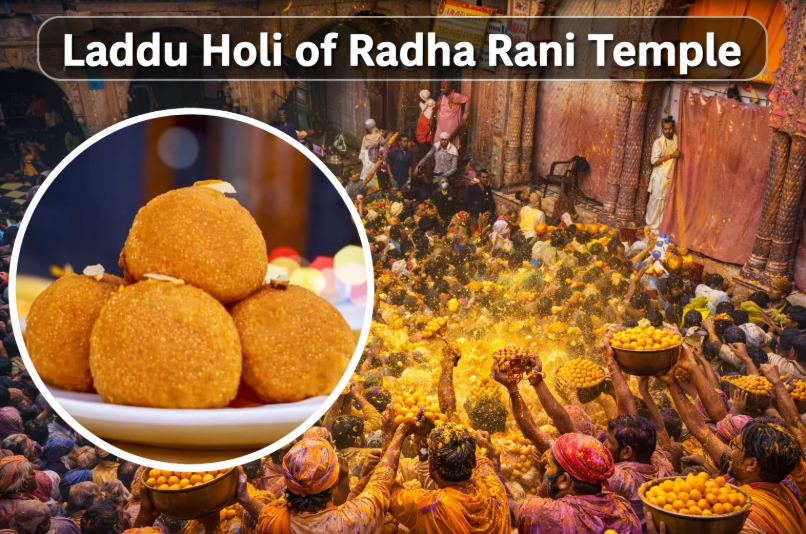
Sweet beginning of Barasan’s Holi From Radha Rani Temple.
- Priests throw laddoos at devotees as blessings.
- Devotional songs describing the leelas of Radha-Krishna.
- This playful ritual symbolises the ceremonial invitation from Radha’s village to Krishna’s village Nandgaon for Holi celebrations.
Lathmar Holi of Barsan and Nandgaon
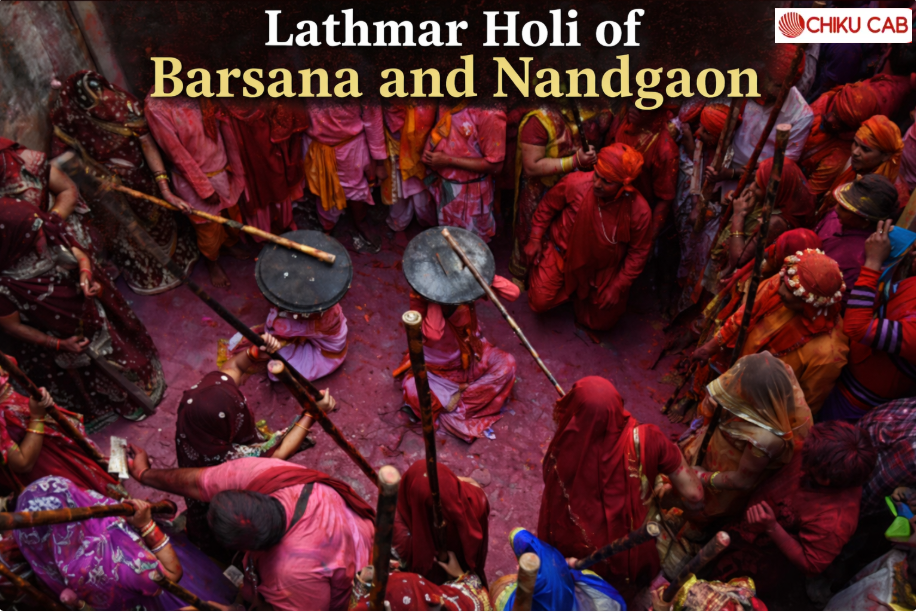
- Lathmar Holi is a two day celebration day-1 in Barsana and day-2 in Nandgaon.
- Men from Nandgaon “attack” Barsana with colors and visit the village.
- Women playfully defend themselves with Lathis.
- The event is filled with enjoyable sounds of drums, songs and joyous crowds.
Mythological origin: Reenactment of Krishna teasing Radha and her friends.
Cultural importance: Structured Tradition preserving local folklore, ritual and community participation.
Phoolon Ki Holi at Banke Bihari Temple
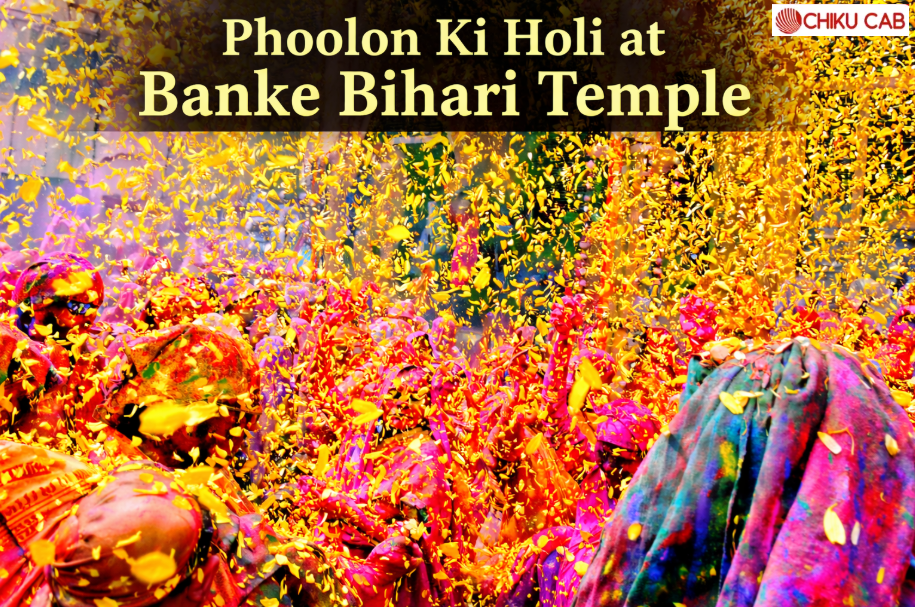
Phoolon Ki Holi – The Flower Celebration at Banke Bihari Temple in Vrindavan.
- Priests shower devotees with thousands of flowers.
- The temple hall turns into a fragrant, colorful garden.
- Chanting “Radhe Radhe” reverberates in the air.
Significance: A playful ritual symbolizes pure devotion and spiritual joy before physical colors are applied.
Widow Holi –
Widow Holi is an inclusion and transformation of a 400-year old tradition that forbade widows from celebrating Holi, was firstly challenged in Vrindavan and in result Vrindavan celebrated its first widow Holi on March 26 of year 2013.
- Historically, widow women were restricted from celebrating Holi.
- Today they celebrate with colors and devotional songs.
- This change is marked as social reforms, equality and emotional freedom to those widows.
Rangbhari Ekadashi –
Rangbhari Ekadashi is starting of the majestical festival on the land of Vrindavan were:
- Idols of Krishna are offered gulal by priests and devotees.
- Processions carry decorated deities across temple courtyards.
- Devotees participate respectfully in color application.
Holika Dahan –
Holika Dahan is a bonfire of purification performed across India, especially in Shri Krishna Janmabhoomi as it is believed that The Narsimha Bhagwan was one of the avatars of Lord Vishnu. he later Killed the demon King Hiranyakashipu, who is brother of Holika, she possessed a divine blessing from Brahma that made her immune to fire.
- Bonfires are lit to symbolize the victory of good over evil.
- Families circle the fire, offering grains and coconuts, believing they burn the negativity of their house as offering to the bonfire.
- This Bonfire is seen as a purification ritual before the main Holi celebration.
Rangwali Holi at Dwarkadhish Temple –
On the main festival day, devotees apply gulal to each other inside temples like Dwarkadhish Temple, it is done with reverence.
- The divine love of Radha-Krishna spreads as clouds filled with powder colors in the air.
- Devotees enjoy dancing on folk songs and Bhajans of Radha-Krishna.
- People celebrate by distributing sweets to each other, and water balloons, water guns & gulal to enjoy the festival of Holi.
Must-Try Traditional Food During Holi
Food and sweets are the life of any festival, you can try a variety of snacks during Holi festival in Mathura.
- Gujiya
- Malpua
- Kachori
- Thandai
- Pav-Bhaji
- Lassi
- Namkin
- Jalebi
- Mathri
Official Holi Schedule with Dates in Mathura 2026
Holi follows the Phalguna month. In 2026:
- Lathmar Holi in Barsana – February 26
- Lathmar Holi in Nandgaon – February 27
- Holika Dahan – March 2
- Rangwali Holi – March 3
- However, in the braj region including Mathura, Vrindavan, Barsan and Nandgaon, celebrations begin 7-10 days before the main Holi date.
- Events such as Laddu Holi, Lathmar Holi, Phoolon ki Holi, Widow’s Holi and temple celebration Other festivities and temple celebrations make the entire week festive.
It is recommended to arrive in Mathura at least 4 – 5 days before the main festival to fully immerse in pre-Holi rituals.
3-Day Holi Tour – Mathura, Barsana & Vrindavan
Day 1 – Barsana
- Arrive in Mathura and check in to the hotel.
- Travel to Barsana.
- Witness Laddu Holi at Shri ji Temple.
- Experience the famous Lathmar Holi celebration.
- Evening visit to Vishram Ghat for Yamuna Arti.
Day 2 – Nandgaon & Vrindavan
- Visit Nanadgaon for Lathmar Holi celebrations.
- Travel to Vrindavan.
- Attend Holi celebration at Banke Bihari Temple.
- Evening visit to Prem Mandir and ISKCON Temple.
Day 3 – Mathura Sightseeing
- Visit Shri Krishna Janmabhoomi Temple.
- Enjoy Holi at Dwarkadhish Temple.
- Return from Mathura to your city.
Mathura to Vrindavan Holi Travel Guide
Distance: 12 km.
Travel Time: 30 to 40 minutes.
Travel option:
- Auto-rickshaw
- Shared e-ricksaw
- Taxi services in Mathura during Holi.
Taxi Service in Mathura During Holi
Due to road closure, pre-book taxis from reliable operators. Hotels also arrange local transport. If you are planning a Mathura Holi tour from Noida or any other city, book return transport in advance.
Where to Stay During Holi 2026
Best Areas to Stay-Premium Hotels & Guesthouses, Mid-Range Hotel, Ashram or Dharamshalas, You can choose your accommodation whichever fits in your budget but one thing you should keep in mind, that your accommodation should be near to Temples. Staying close to major temples such as central locations reduces travel time during heavy festival crowds.
- Shri Krishna Janma Bhoomi
- Banke Bihari Temple
- Prem Mandir
Booking Tips
- Book accommodation 1 – 2 months in advance to get a premium hotel room of your liking.
- Confirm bookings directly with the hotel to avoid last-minute issues.
- Advance booking will save you from higher prices during Holi week.
- Check cancellation policies carefully.
Best Time To Visit Mathura for Holi 2026
Visitors should plan to reach at least four to five days before the main Holi celebration to fully enjoy the temple festivities in Vrindavan and nearby events in Barsana.
It is advisable to depart a day after Holi, as transportation and roads are often crowded immediately following the festivals.
Holi 2026 in Mathura and Vrindavan is intense, traditional, deeply emotional and truly unforgettable. It cannot be completely captured through pictures or videos, it can only be experienced in person.
For travelers seeking the most genuine and spiritually rich Holi is more than colors, it represents devotion, heritage, togetherness and centuries-old traditions that continue to thrive year after year.
FAQs
1.How is Holi celebrated in Mathura?
In Mathura, Holi is celebrated with colorful temple rituals, Devotional singing and grand Krishna themed festivities.
2.Is it good to visit Vrindavan during Holi?
Yes, Vrindavan offers a vibrant and spiritually immersive Holi experience.
3.Where is Holi celebrated in Vrindavan?
Holi in Vrindavan is mainly celebrated at Banke Bihari Temple and other prominent temples.
4.How many days Holi is celebrated in Mathura in 2026?
Holi in Mathura in 2026 will be celebrated for about 7-10 days with various traditional events.
5. Is Holi in Vrindavan safe for solo travelers?
Holi in Vrindavan is generally safe for solo travelers who stay in crowded areas and follow safety precaution.
6.When is Holi celebrated in Mathura in 2026?
Holi in Mathura will be celebrated in March 2026 on Phalguna Purnima, with festivities starting about a week earlier.
7.Why is Holi in Mathura so famous?
Mathura’s Holi is renowned because it honors Lord Krishna’s birthplace and features grand, devotional celebration.
8.How can I reach Mathura for Holi?
Mathura is accessible by train and road, and many travelers arrive via Delhi airport and continue by taxi.
9. When should I book hotels for Holi in Mathura?
It’s best to reserve accommodation at least 1–2 months early due to heavy tourist demand and rising prices.
10.What is the best place to celebrate Holi in Mathura?
Krishna Janmabhoomi Temple, Dwarkadhish Temple And Banke Bihari Temple are top spots offering a Unique celebration style.

I’m a wanderer who loves venturing on to unknown and unseen places. I explore freely to various fun and adventurous places, whether it be spiritual temple tours, captivating landscapes, and more. I wonder around in search of hidden gems and tourist attractions, temples, and other places.